SOUTH ASIAN SECURITY AND U.S.-INDIA RELATIONS
For over a decade, I have worked on the strategic dynamics of Southern Asia, with a focus on nuclear security, deterrence stability, and the evolving U.S.-India relationship. This work combines independent research with sustained policy engagement. This body of work is sustained by an extensive network of relationships across American and Indian policy, scholarly, and defense communities. Over a decade of regular engagement—through bilateral dialogues, workshops, roundtables, and conferences in New Delhi, Jaipur, Islamabad, and Washington—I have built the kind of institutional relationships that allow for candid exchange on sensitive topics and that give my analysis a depth of contextual understanding that desk research alone cannot provide.
Published work in this area can be found on my publications page.
U.S.-India Relations
My co-edited volume, The Challenges of Nuclear Security: U.S. and Indian Perspectives (Palgrave Macmillan, 2024), represents the culmination of years of bilateral engagement with Indian scholars and practitioners. The book brings together American and Indian contributors to examine how each country approaches the challenge of securing its nuclear enterprise.
The U.S.-India engagement that produced this volume continues through the U.S.-India Strategic Engagements project at the Naval Postgraduate School, which I co-lead. A series of events in India and the United States in 2026 and 2027 will share the book’s findings with wider policy audiences, and a new U.S.-India Track 1.5 Strategic Dialogue is planned for New Delhi. More on this ongoing work can be found on the Track 1.5 Diplomacy and Strategic Engagement page.
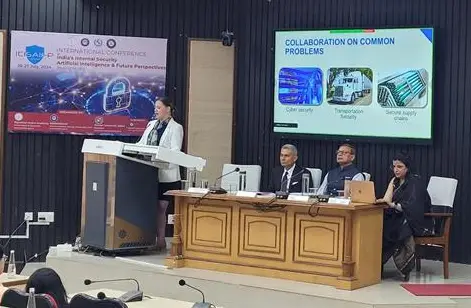
Presentation at “Internal Security, Artificial Intelligence, and Future Perspectives” conference at the Rajasthan Police Academy, July 2024.
South Asian Security Dynamics
I am especially interested in the military and strategic dimensions of South Asian security. In The Washington Quarterly, I assessed whether India’s development of nuclear-armed submarines strengthens deterrence or introduces new risks of accidental escalation—a question with implications for naval posture across the Indo-Pacific. In War on the Rocks, I argued that the undersea nuclear competition between India and Pakistan was only beginning and that existing frameworks for managing deterrence stability were not prepared for it. I have also published on Pakistan’s nuclear posture and its dependence on tactical nuclear weapons to offset India’s conventional superiority, on the nuclear taboo as seen from Pakistani strategic culture, and on how China’s military modernization affects India’s nuclear calculations.
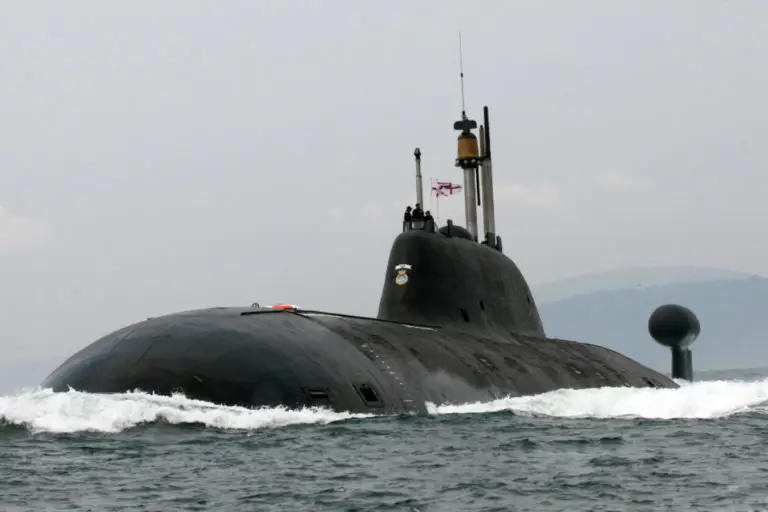
Photo credit: Indian Navy